
Judicial Ruling and Trump's New Move The US Supreme Court has ruled that the International Emergency Economic Powers Act (IEEPA), which President Donald Trump relied on for tariffs implemented last year, does not grant the president the authority to impose such duties.
However, this ruling did not lead to a retreat in Trump's trade policies.
Immediately following the court's decision, Trump invoked Section 122 of the Trade Act of 1974, signing a decree for a 10% global customs tariff on all countries.
Shortly thereafter, it was announced that this rate would be increased to 15%, effective immediately.
These moves have once again escalated uncertainty in the global trade environment.
ING: Uncertainty Back on the Agenda In an analysis prepared by Carsten Brzeski, ING Think's Global Head of Macro, and James Knightley, International Chief Economist, it was emphasized that Trump has not abandoned his tariff agenda despite the court ruling.
The analysis stated that, considering the recent stances of European leaders, the risk of escalation is much higher than it was a year ago.
Economic Effects Expected to Last Alan Taylor, a member of the Bank of England's Monetary Policy Committee, pointed out during a meeting in London that high US import taxes could become permanent.
Taylor noted that it could take years for the full impact of these tariffs on the global economy to be felt, signaling a new era in the world of trade.
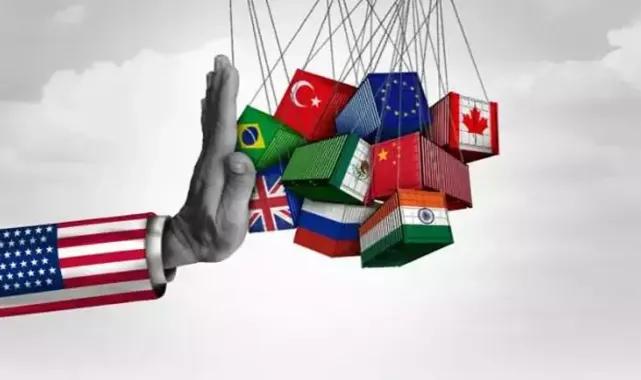
ING Warns of Global Trade War: Trump's New Tariff Move Escalates Tensions
Despite a US Supreme Court ruling limiting presidential authority, Donald Trump has introduced new global tariffs, prompting ING to warn that the risk of a trade war is now higher than last year.
Sources
- Ekonomi Dünya · baglanti