
Historic Levels Recorded in Indices European stock markets closed the final trading day of the week with strong gains following the US Supreme Court's decision to restrict tariff powers.
The increased risk appetite following the ruling pushed the continent's leading indices to record levels.
The benchmark Stoxx Europe 600 index rose by 0.84 percent to 630.56 points, while the Eurozone's leading index, the EuroStoxx 50, gained 1.18 percent to reach a new record of 6,131.31 points.
In the United Kingdom, the FTSE 100 index increased by 0.56 percent to 10,686.89 points, renewing its historic peak.
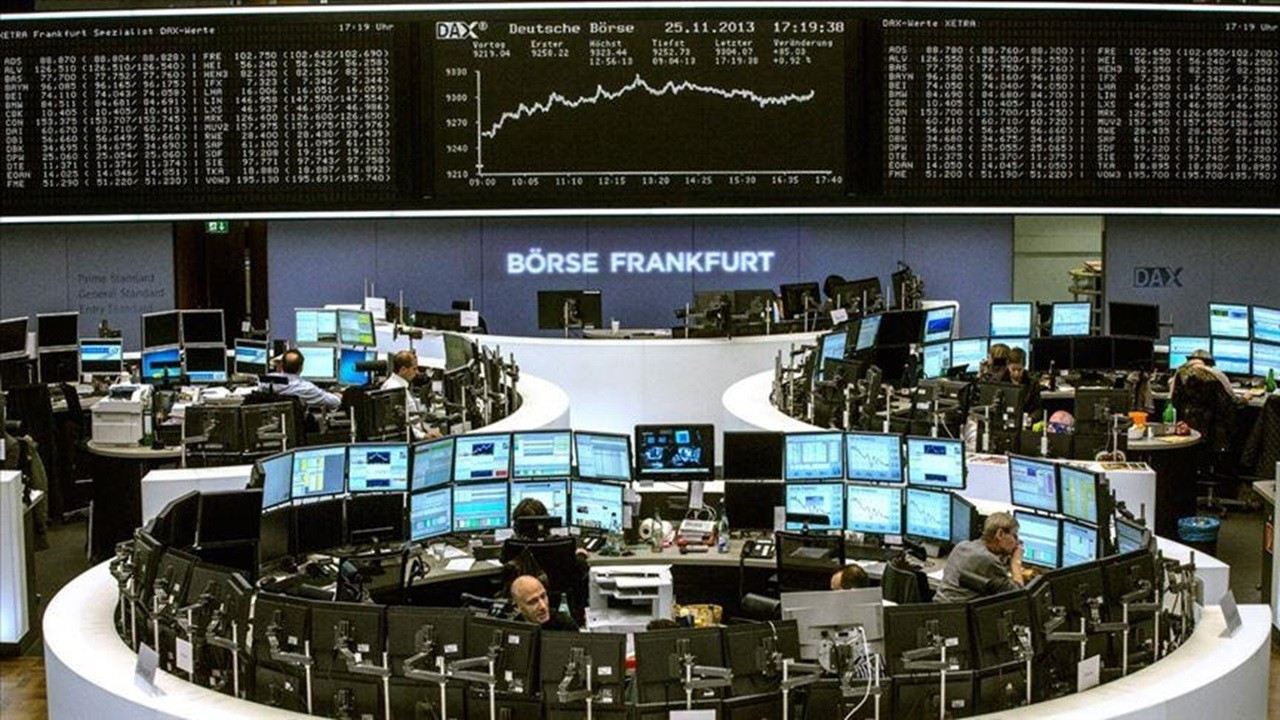
Germany's DAX 40 index rose 0.87 percent to 25,260.69 points, France's CAC 40 index increased 1.39 percent to 8,515.49 points, and Italy's FTSE MIB 30 index gained 1.48 percent to reach 46,472.98 points.
Supreme Court Limits Authority In a 6-3 ruling, the US Supreme Court held that the International Emergency Economic Powers Act (IEEPA), which President Donald Trump relied on for tariffs, does not grant the president unlimited authority to impose them.
The court emphasized that under the US Constitution, the power to impose taxes and duties belongs exclusively to Congress.
The ruling noted that in the half-century history of the law, no president had exercised such authority in this manner.
This legal development was welcomed by the European Union and global trade partners, creating optimism in the markets.
Sectoral Developments and Macroeconomic Data The rise in European equity markets was led by the consumer goods sector.
Italian fashion house Moncler gained over 17 percent following strong fourth-quarter financial results.
Luxury goods giants LVMH rose 4.4 percent, Hermes 3.6 percent, and Burberry 3.3 percent.
In the chemical sector, Air Liquide gained 4.8 percent, while food producer Danone fell 0.7 percent due to uncertainties in its China operations.
On the economic data front, producer prices in Germany fell by 3.0 percent annually in January, supporting expectations for a decline in inflation.
The German manufacturing PMI rose to 50.7, entering the growth zone for the first time in three and a half years.
Meanwhile, the US economy grew by 1.4 percent in the fourth quarter, in line with expectations.
However, President Trump's warnings regarding a limited timeframe for negotiations with Iran caused geopolitical risks to continue weighing on the markets.
Record Closing for European Stock Markets: US Supreme Court Tariff Ruling Boosts Markets
European stock markets reached historic highs following a US Supreme Court ruling that limits President Donald Trump’s authority to impose additional trade tariffs.
Sources
- Dünya Gazetesi · baglanti