
Legal Grounds and Refund Demands The US Supreme Court has ruled that the International Emergency Economic Powers Act (IEEPA) of 1977 does not grant the president broad authority to impose import taxes.
While this decision initiates a new legal process in trade policy, experts emphasize that tariffs have not been eliminated entirely; rather, the legal framework supporting them is shifting.
Approximately $133 billion in revenue was generated from taxes implemented under the IEEPA through the end of last year.
Following the court's decision, whether importing companies can claim refunds for these amounts will depend on rulings from lower courts.
The fact that thousands of companies are preparing for legal action is cited as a primary factor increasing market uncertainty.
Alternative White House Plans Despite the court's ruling, the White House continues to evaluate various legal options to maintain customs duties.
Donald Trump announced that he has increased his global tariff intention from an initial 10% to 15%, citing Section 122 of the Trade Act of 1974.
This provision allows for the implementation of temporary taxes for up to 150 days based on balance-of-payments justifications.
For more permanent and sector-specific regulations, officials indicate that Sections 301 and 232 could be utilized.
Section 301 enables investigations into "unfair trade practices," while Section 232 allows for taxes in strategic sectors such as steel, aluminum, and automotive on national security grounds.
Potential for 50% Tariffs and Global Impact Section 338 of the Tariff Act of 1930, viewed as a more aggressive option in trade conflicts, is also under consideration.
This provision paves the way for customs duties of up to 50% on countries deemed to be discriminating against the United States.
This situation is being closely monitored by global trade partners and financial markets.
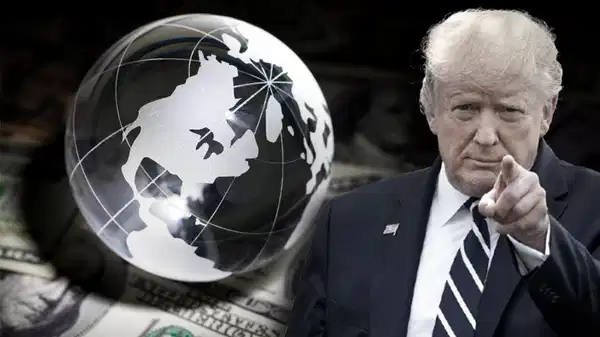
Trump's New Trade Strategies Following US Supreme Court Tariff Ruling
Despite the US Supreme Court limiting presidential authority over tariffs, the Trump administration is pursuing alternative legal avenues to implement additional taxes. The potential for tariffs as high as 50% continues to fuel uncertainty in global markets.
Sources
- Cumhuriyet · baglanti