
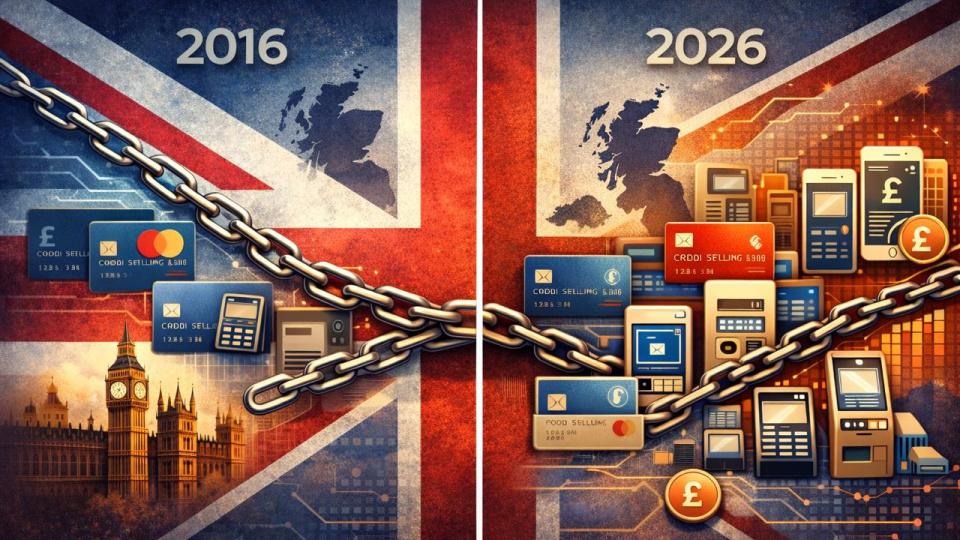
2016: The Beginning of Financial Transformation Following the Brexit referendum, the United Kingdom faced financial uncertainty and sold Vocalink, the core of its payment infrastructure, to Mastercard for £1 billion.
This move weakened local control while aiming to break up the banking oligopoly.
The Role of Vocalink and Milestones Since 2016 Vocalink brought together the infrastructure that manages Faster Payments, Bacs, and the LINK ATM network under one roof.
After 2016, open‑banking regulations, the rise of digital banks, and the growth of A2A payment models turned the UK into a rapidly evolving fintech market.
Irony of Transformation: Loss of Local Control Although the initial goal was to weaken the banking oligopoly, the card duopoly of Mastercard and Visa eventually gained strategic control over payment infrastructure.
Local banks were left with limited authority over payments.
Mid‑2020s: Payment Systems and Economic Sovereignty Control over payment infrastructure became a strategic policy issue rather than a mere technology choice.
In 2026, a new national payment vision was proposed, focusing on modernizing Faster Payments and strengthening alternative channels to card networks.
Lessons Learned Infrastructure is not the same as product; competition policies can have unexpected outcomes.
Local payment systems have become a critical component of economic sovereignty.
The UK's Story as a Valuable Example The UK's experience offers a valuable lesson for other countries, marking a turning point that will shape the future of its payment strategy.
The United Kingdom's Payment Systems: A Journey from 2016 to 2026
The sale of Vocalink to Mastercard in 2016 reignited discussions about the UK's payment infrastructure's geopolitical significance, culminating in a 2026 push for a new national payment vision.
Sources
- Bloomberght · baglanti