
Supreme Court Rules Taxing Power Belongs to Congress The US Supreme Court has issued a landmark decision affecting the global economy, ruling that the International Emergency Economic Powers Act (IEEPA) does not authorize the president to impose trade tariffs.
In a 6-3 decision, the court emphasized that under the US Constitution, the power to levy taxes and duties belongs exclusively to Congress.
The court's opinion stated that the government's interpretation of the IEEPA as a law granting "unlimited and unilateral tariff authority" was incorrect.
Noting that no president in the law's 50-year history had used it to impose tariffs, the court clarified that the phrase "regulating imports" within the statute does not encompass the congressional power to tax.
The ruling further noted that such a significant delegation of authority, carrying major economic and political consequences, cannot be granted by Congress through ambiguous language.
This decision effectively redefines the constitutional limits of presidential emergency powers.
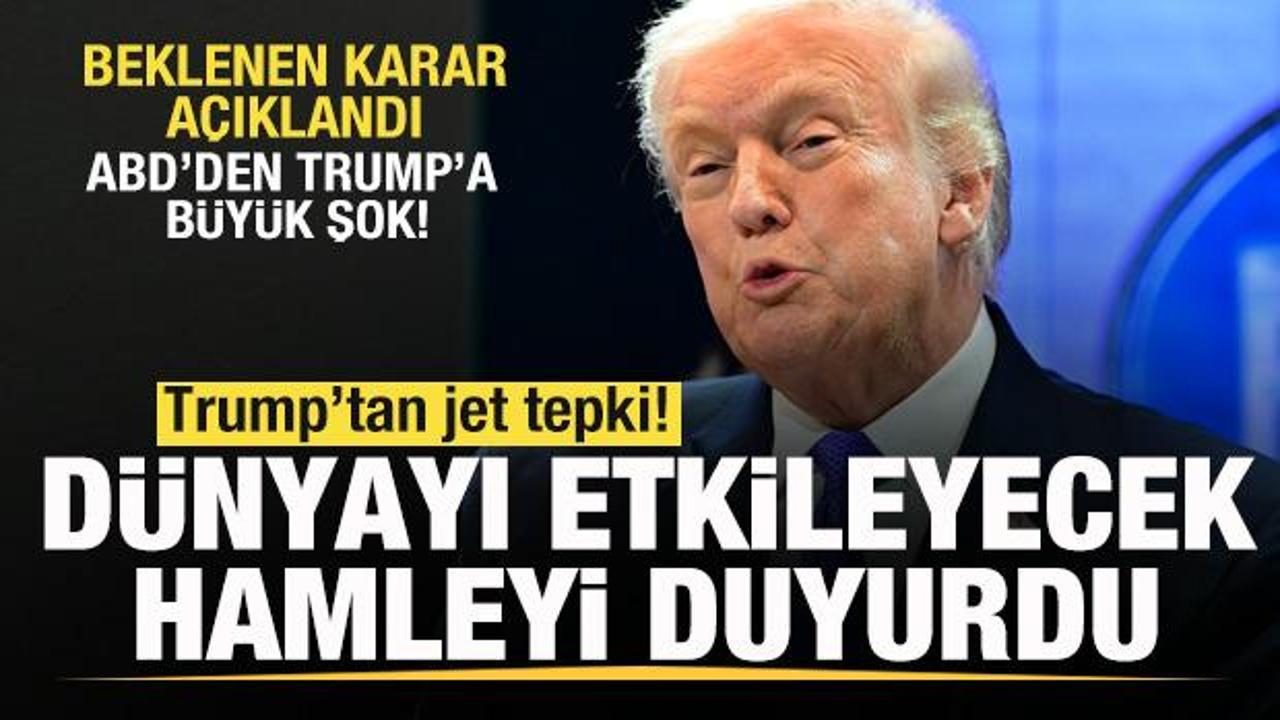
Trump Signals New Tariffs and Investigations Following the ruling, President Donald Trump held a press conference at the White House, describing the court's decision as "extremely disappointing." Trump suggested that while foreign nations might celebrate the ruling, their satisfaction would be short-lived as he still possesses powerful legal tools.
"The good news is that there are stronger methods recognized by Congress that I can use as president.
I will sign a 10% global tariff decision under Section 232.
Additionally, we will launch new investigations under Section 301 against unfair trade practices," Trump stated.
Background of the Legal Dispute Trump, who has utilized tariffs as a primary tool of trade policy, had imposed additional duties on numerous trading partners—including China, Canada, and Mexico—under the IEEPA after taking office.
These actions were challenged in court by private companies and various states.
On May 28, 2025, the US Court of International Trade ruled that the tariffs exceeded presidential authority.
The case then moved to the Supreme Court, which heard oral arguments on November 5, 2025, before reaching this final verdict.
US Supreme Court Overturns Trump's Unilateral Tariff Authority
The US Supreme Court has ruled that the International Emergency Economic Powers Act does not grant the president authority to impose unilateral tariffs. In response, Donald Trump announced he would utilize alternative legal mechanisms to maintain his trade policy.
Sources
- Haber 7 · baglanti