
Regional Production and 2026 Targets Southeastern Anatolia maintains its strategic importance in Turkey's journey toward energy independence.
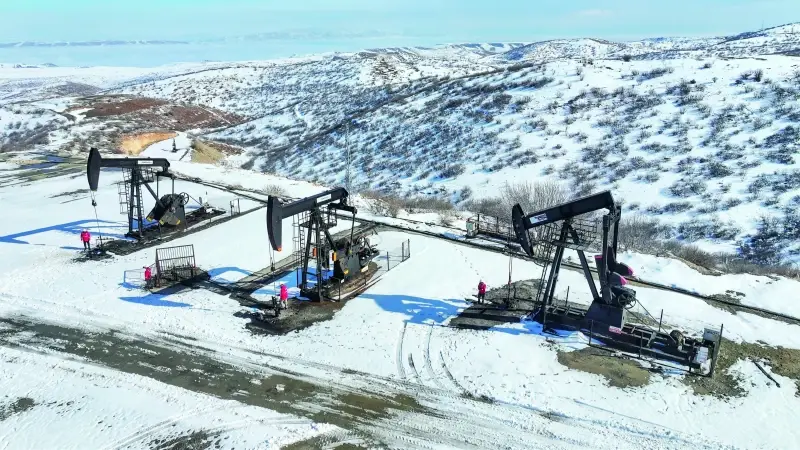
Crude oil extracted from fields in the provinces of Batman, Diyarbakır, Siirt, and Mardin provides a critical contribution to the national economy.
According to data from the Turkish Petroleum Corporation (TPAO), an average of 35,085 barrels of crude oil are produced daily across these four provinces.
This amount corresponds to approximately 28 percent of Turkey's total crude oil production.
Mehmet Tahir Ergin, TPAO Batman Regional Production Manager, stated that efforts to increase production capacity are ongoing.
Noting that 52 new wells were opened in the region in 2025, Ergin emphasized that their goal for 2026 is to increase this number to 140 new wells.
History of Oil from Raman Mountain to the Present Turkey's oil exploration journey gained momentum with the establishment of the Mineral Research and Exploration Institute (MTA).
On January 17, 1946, the first oil discovery was made at a depth of 1,361 meters on Raman Mountain in Batman.
The real turning point in the region occurred at the well named "Raman-8." Starting commercial production on March 8, 1948, this well has produced over 1 million barrels of oil since its opening, becoming a locomotive for the regional economy.
Production activities have continued uninterrupted in 72 wells in Mardin since 1970 and in 60 wells in Siirt since 1956.
Oil production has also led to major transformations in the administrative and economic structure of the region.
Oil Push in Southeast Anatolia: Four Provinces Account for 28 Percent of Turkey's Production
Batman, Diyarbakır, Siirt, and Mardin produce 35,085 barrels of oil daily, with TPAO aiming to increase the number of wells in the region to 140 by 2026.
Sources
- Yeni Şafak · baglanti