
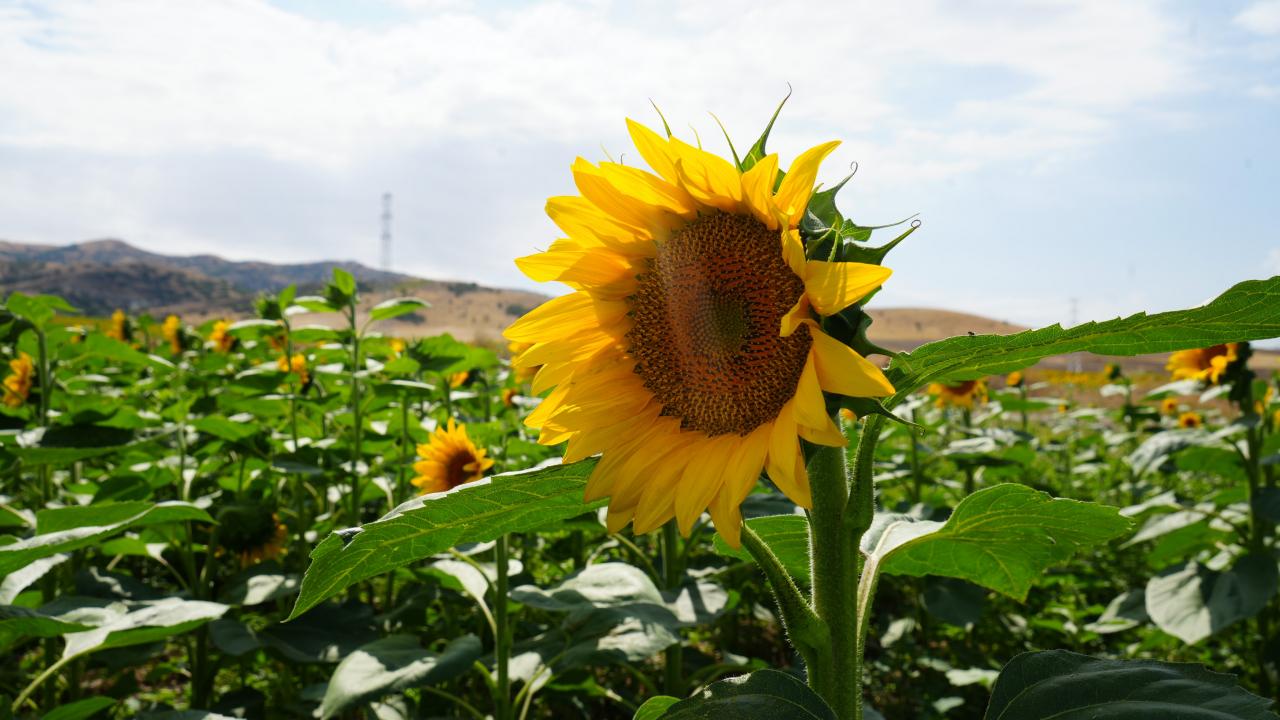
Sunflower Planting After Harvest In the Polatlı district, fields are being utilized for sunflower cultivation as a second crop following the completion of the wheat harvest.
Planting typically begins in mid-July, with the crops becoming ready for harvest by early November.
A 90-Day Growth Cycle Sunflowers are plants that mature within 90 days.
Irrigation begins in mid-July, and the crop reaches harvest readiness within the following period.
The irrigation process requires labor; however, if pipe lines are permanently installed, two workers are generally sufficient to manage the process.
Additional Income for Farmers In regions without water scarcity, sunflower cultivation provides farmers with the opportunity for a second crop and additional income within the same year.
Yields are expected to range between 250–300 kilograms per decare, with prices estimated between 35–40 TL per kilogram.
Prices, which were around 30 TL last year, are expected to stabilize further this season.
Experience from the Field Farmer Hasan Kılınç stated that he began planting his 90-day sunflowers on July 10, with the harvest expected to take place between October 15 and November 1.
He anticipates a yield of 250–300 kilograms per decare.
The Importance of Sunflowers as a Second Crop As a second crop, sunflowers support farmers by providing a source of income during the winter months.
Additionally, this agricultural activity contributes to national efforts to reduce the country's dependence on imported oils.
Sunflower Planting Begins in Polatlı Following Wheat Harvest
Farmers in Polatlı are planting sunflowers as a second crop after the wheat harvest to generate additional income and reduce Turkey's oil deficit.
Sources
- Haber 7 · baglanti