
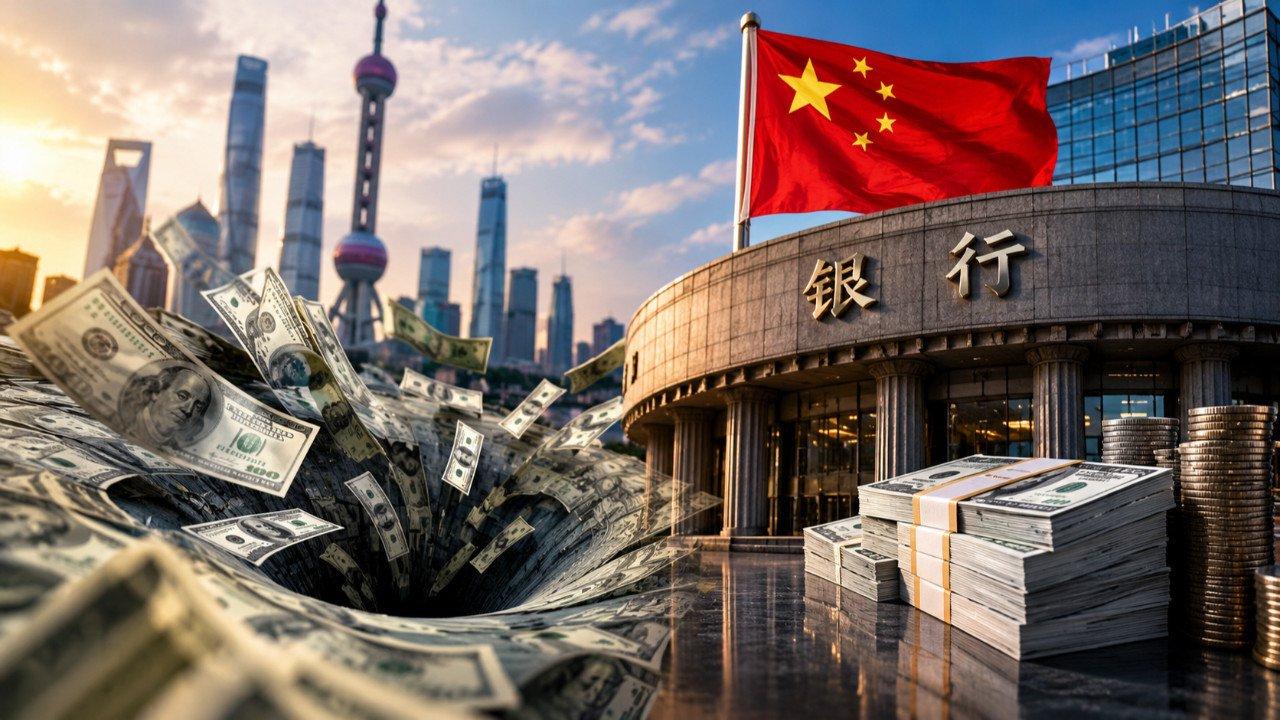
Scope of the Investment The Chinese government has injected a total of $54 billion in capital into eight public banks and insurance companies to strengthen the resilience of the financial sector and sustain credit flow.
Most of the capital was directed to the country’s two largest banks.
Sectoral Impact China’s banking sector has a total balance sheet of about $74 trillion.
While the $54 billion capital injection may have a limited overall effect, it aims to increase lending capacity in critical areas.
Market Reaction Following the announcement, shares of listed Chinese banks fell briefly.
Investors signaled that the announced source would not fully resolve the financial system’s challenges.
Credit Flow and Debt Restructuring Between 2019 and 2024, roughly 84 trillion yuan ($12.2 trillion) of debt was restructured.
About 60 % of real‑estate debt was resolved.
Local government financing vehicle debt stands at around 70 trillion yuan.
Consolidation in the Sector Large banks are accelerating mergers by acquiring district and rural banks with financial difficulties.
The number of banks is expected to fall from about 4,000 in 2019 to 2,300 by the end of 2026.
Profitability and Future Outlook The net interest margin fell from 2.1 percentage points in 2022 to 1.4 points since 2025, affecting profitability and lending capacity.
Economy planners anticipate continued smaller‑scale capital support for banks, but the $54 billion injection alone is unlikely to solve the broader systemic issues.
China Injects $54 Billion into Eight Public Banks
The Chinese government has injected $54 billion in capital into eight public banks and insurance companies to bolster credit flow and tackle non‑performing assets.
Sources
- Haber 7 · baglanti